Asia, the largest and most populous continent on Earth, plays a central role in shaping global history, economics, politics, and culture. Covering vast geographical landscapes and hosting more than half of the world’s population, Asia is a continent of extraordinary diversity, rapid development, and profound historical significance.
Stretching from the Mediterranean Sea in the west to the Pacific Ocean in the east, and from the Arctic Ocean in the north to the Indian Ocean in the south, Asia encompasses a remarkable range of climates, ecosystems, and civilizations. Home to some of the world’s oldest cultures and fastest-growing economies, Asia continues to influence global trends in technology, trade, geopolitics, and culture.
This report provides an in-depth overview of Asia’s geography, population, economy, culture, political significance, and future challenges.
Asia is the largest continent in the world, covering approximately 44.5 million square kilometers, which represents about 30 percent of the Earth’s total land area. It borders Europe to the west, Africa to the southwest, and is separated from North America by the Bering Strait.
Geographically, Asia is incredibly diverse. It contains the world’s highest mountain ranges, largest deserts, dense rainforests, fertile river valleys, and vast plains.
Some of the most notable geographical features include:
The Himalayan Mountain Range
The Himalayas form the highest mountain system on Earth and include Mount Everest, the world’s tallest peak at 8,848.86 meters above sea level. These mountains stretch across several countries including Nepal, China, India, and Bhutan.
Major Rivers
Asia is home to several of the longest and most important rivers in the world, such as the Yangtze River, Yellow River, Mekong River, Ganges River, Indus River, and Tigris-Euphrates river system. These rivers have supported civilizations for thousands of years.
Deserts
The continent also hosts vast deserts including the Gobi Desert in Mongolia and China, the Arabian Desert in the Middle East, and the Thar Desert in India and Pakistan.
Forests and Biodiversity
Tropical rainforests in Southeast Asia contain some of the richest biodiversity on Earth, supporting countless plant and animal species.
Due to this geographical diversity, Asia experiences a wide range of climates, from Arctic conditions in Siberia to tropical climates in Indonesia and Malaysia.
Asia is home to approximately 4.7 billion people, which is nearly 60 percent of the global population. This makes it the most densely populated continent in the world.
Several of the world’s most populous countries are located in Asia, including China, India, Indonesia, Pakistan, and Bangladesh.
China and India alone account for more than one-third of the world’s population.
Asia’s population distribution varies greatly. Countries like Mongolia have low population density, while nations such as Bangladesh and Japan have extremely dense populations.
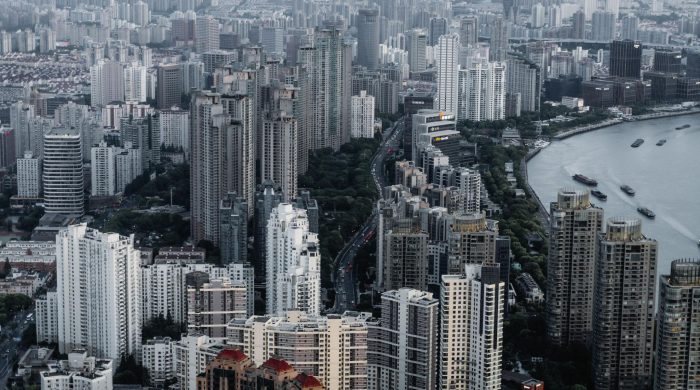
Urbanization is increasing rapidly across Asia. Major megacities have emerged as economic and cultural centers, including:
Tokyo
Shanghai
Beijing
Mumbai
Jakarta
Seoul
Bangkok
Dubai
Singapore
Many Asian cities are among the largest metropolitan areas on Earth.
Asia is widely regarded as the most culturally diverse continent. Thousands of languages, ethnic groups, and traditions exist across the region.
Major language families in Asia include:
Sino-Tibetan languages (Mandarin Chinese)
Indo-European languages (Hindi, Bengali, Persian)
Austronesian languages (Indonesian, Malay)
Turkic languages
Dravidian languages (Tamil, Telugu)
Religion also plays a central role in Asian societies. Several of the world’s major religions originated in Asia, including:
Hinduism – Originating in India over 4,000 years ago.
Buddhism – Founded by Siddhartha Gautama in ancient India.
Islam – The world’s second largest religion, with strong presence in West, Central, and Southeast Asia.
Christianity – Though it originated in the Middle East, it spread globally and remains present across parts of Asia.
Confucianism and Taoism – Influential philosophical traditions from China.
Asian culture is reflected in diverse art forms, music, literature, architecture, cuisine, and traditional practices. From Japanese tea ceremonies to Indian classical dance, cultural traditions remain deeply rooted in everyday life.
Over the past several decades, Asia has become the engine of global economic growth. The continent hosts some of the world’s largest and fastest-growing economies.
Major economic powers in Asia include:
China
Japan
India
South Korea
Indonesia
Saudi Arabia
United Arab Emirates
Singapore
China is currently the second-largest economy in the world, while Japan ranks among the top developed economies.
Asia is also a global hub for manufacturing, technology, and trade. Many of the world’s leading technology companies operate in Asia, particularly in countries like China, South Korea, Japan, and Taiwan.
Key industries across Asia include:
Electronics and semiconductors
Automobile manufacturing
Oil and gas production
Textiles and garments
Agriculture and food production
Tourism and hospitality
Asia also hosts some of the busiest trade routes and ports in the world, making it essential to international commerce.
Asia possesses vast natural resources that contribute significantly to the global economy.
Important resources found across the continent include:
Oil and natural gas (Middle East)
Coal reserves (China, India)
Rare earth minerals (China)
Precious metals such as gold and copper
Timber and agricultural resources
The Middle East region of Asia contains some of the largest oil reserves in the world, making it a critical area for global energy markets.
Countries such as Saudi Arabia, Iran, Iraq, Kuwait, and the United Arab Emirates play a key role in global petroleum production.
Asia’s political landscape is complex and diverse, consisting of democracies, monarchies, socialist states, and authoritarian governments.
Major political systems across Asia include:
Democracies
Countries such as India, Japan, South Korea, and Indonesia operate under democratic political systems.
Communist Governments
China, Vietnam, and Laos have communist party-led governments.
Monarchies
Several countries maintain monarchies, including Saudi Arabia, Thailand, and Japan.
Asia also plays a central role in global geopolitics. Major regional organizations help facilitate cooperation between nations.
Important regional organizations include:
ASEAN (Association of Southeast Asian Nations)
SAARC (South Asian Association for Regional Cooperation)
Gulf Cooperation Council (GCC)
Shanghai Cooperation Organization (SCO)
These organizations address economic cooperation, security, trade, and regional stability.
Asia has emerged as a global leader in technological innovation and digital development.
Countries such as Japan, South Korea, China, and Singapore are known for their advanced technology sectors.
Key technological achievements from Asia include:
High-speed rail networks
Advanced robotics
Semiconductor manufacturing
Artificial intelligence research
Mobile technology and telecommunications
South Korea and Japan are among the global leaders in electronics and robotics, while China has rapidly expanded its influence in artificial intelligence and digital infrastructure.
Asian companies such as Samsung, Huawei, Toyota, and Sony have become global brands.
Agriculture remains a vital part of Asia’s economy and livelihood, particularly in rural areas.
Major agricultural products include:
Rice
Wheat
Tea
Coffee
Spices
Rubber
Palm oil
Asia produces the majority of the world’s rice, a staple food for billions of people.
Countries such as India, China, Thailand, and Vietnam are major agricultural producers and exporters.
However, food security remains a challenge in certain parts of the continent due to population growth, climate change, and water shortages.
Despite its economic growth, Asia faces significant environmental challenges.
Major environmental concerns include:
Air Pollution
Large cities such as Beijing, Delhi, and Jakarta often struggle with severe air pollution.
Deforestation
Rainforests in Southeast Asia are threatened by logging and agricultural expansion.
Climate Change
Many Asian countries are vulnerable to rising sea levels, extreme weather events, and flooding.
Water Scarcity
Several regions face water shortages due to overuse and climate change.
Governments and international organizations are increasingly working on sustainable development policies to address these issues.
Asia is one of the world’s most popular tourist destinations, offering historic landmarks, natural wonders, and vibrant cultures.
Some of the most famous tourist attractions include:
The Great Wall of China
Taj Mahal in India
Petra in Jordan
Angkor Wat in Cambodia
Mount Fuji in Japan
Bali in Indonesia
Millions of tourists travel to Asia every year to experience its rich history, diverse cuisines, ancient temples, and modern cities.
Tourism contributes billions of dollars annually to many Asian economies.
Asia’s importance in the global system continues to grow.
With its large population, expanding middle class, and technological advancements, Asia is expected to play a major role in shaping the global economy in the coming decades.
Experts predict that several Asian economies will continue to grow rapidly, increasing the continent’s influence in global finance, politics, and culture.
The region is also likely to lead innovation in renewable energy, digital technology, and sustainable infrastructure.
Asia is not only the largest continent geographically but also one of the most influential regions in the modern world. From ancient civilizations to modern megacities, the continent represents a unique blend of tradition and innovation.
With its enormous population, diverse cultures, powerful economies, and strategic geopolitical position, Asia continues to shape global developments in multiple fields.
While challenges such as environmental issues, political tensions, and economic inequality remain, Asia’s potential for growth and progress remains immense.
As the 21st century unfolds, Asia is expected to remain at the center of global transformation, influencing the future of technology, economics, and international relations.
Section-11, Block-A, Mirpur, Dhaka-1216. Mobile : 01700 000000. Email: fastinfoworldinfo@gmail.com
All rights reserved © 2026 fastinfoworld