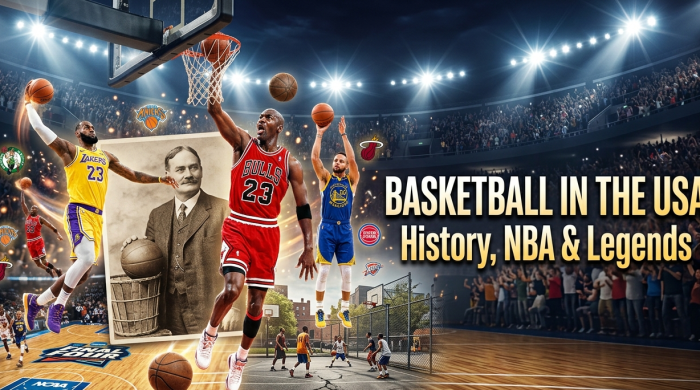
Basketball, often regarded as one of the most popular and influential sports in the United States, has a rich history that spans over a century. From its humble beginnings as an indoor physical activity designed to keep athletes in shape during the winter months, basketball has evolved into a major professional, collegiate, and international sport. The game has shaped American culture, inspired generations, and played a significant role in globalizing American sports. This report explores the origins of basketball, its development in the United States, the rise of professional leagues, cultural significance, and its modern impact.
Basketball was invented in December 1891 by Dr. James Naismith at the International YMCA Training School. Naismith developed the game as a solution to the problem of keeping athletes active indoors during the harsh New England winters. His objective was to create a sport that emphasized skill, teamwork, and non-contact competition.
The original rules of basketball were simple:
Players aimed to throw a soccer ball into a peach basket attached to a balcony.
Dribbling was not originally allowed; the game relied mostly on passing.
There were nine players per team in early games.
Physical contact was strictly limited to maintain safety.
The sport quickly gained popularity in YMCAs across the United States, spreading to colleges and high schools in the following decades.

By the early 20th century, basketball had begun to gain traction in educational institutions. Collegiate basketball became the primary avenue for the sport’s development:
NCAA Formation: The National Collegiate Athletic Association (NCAA) began organizing college-level competitions in the 1930s.
Rule Evolution: Rules were adapted to improve the flow of the game, including the introduction of dribbling, standardized court sizes, and shot clocks in later years.
Notable Early Programs: Universities such as University of Kansas, University of Kentucky, and University of North Carolina developed strong basketball programs, producing some of the sport’s early stars.
College basketball quickly became a cultural phenomenon, especially with the introduction of national tournaments like the NCAA March Madness in 1939, which remains a major annual sporting event.

Professional basketball in the United States began to take shape in the 1920s and 1930s, though it faced numerous challenges due to financial instability and lack of mass appeal compared to baseball and football.
Early Leagues: The first professional basketball leagues, such as the National Basketball League (NBL), were formed to provide organized competition for adult players.
Team Formation: Teams were often sponsored by companies, local businesses, or community organizations. Examples included the Akron Goodyear Wingfoots and the Fort Wayne Zollner Pistons.
Challenges: Early professional basketball struggled with low attendance, inconsistent salaries, and competition from college basketball, which was more popular among fans.
Despite these obstacles, the foundations were laid for the modern professional game.

The National Basketball Association (NBA) as we know it today was formed in 1949 through a merger of the Basketball Association of America and the NBL. This marked a turning point for professional basketball in the United States.
Early Expansion: The league initially consisted of 17 teams, but financial instability forced consolidation.
Integration: African-American players began joining the NBA in the 1950s, breaking racial barriers and diversifying the sport.
Rule Standardization: Key rules such as the 24-second shot clock (introduced in 1954) transformed the pace of the game, making it more exciting and spectator-friendly.
The NBA gradually gained mainstream recognition and started to cultivate star players whose influence extended beyond the court.
Throughout its history, basketball in the United States has been shaped by legendary players who defined eras and elevated the sport’s popularity.
1950s–1960s: Players like Bill Russell and Wilt Chamberlain dominated the league, introducing athleticism and skill at an unprecedented level.
1980s: The rivalry between Larry Bird and Magic Johnson captured national attention, revitalizing the NBA’s popularity.
1990s: Michael Jordan became a global icon, turning basketball into a worldwide phenomenon and establishing the NBA as a global brand.
Modern Era: Stars like LeBron James, Stephen Curry, and Kevin Durant continue to shape the sport with athletic skill, media presence, and social impact.
These players have not only influenced the professional game but also inspired millions of youth to play basketball at amateur and school levels.
Basketball’s influence extends far beyond the court:
Youth Participation: Millions of Americans play basketball in schools, community centers, and recreational leagues.
Urban Culture: The sport has become an integral part of urban culture, particularly in cities like New York, Chicago, and Los Angeles. Streetball and playground legends contribute to the sport’s grassroots appeal.
Media and Entertainment: Basketball dominates television ratings, with NBA games broadcast nationally and internationally. Movies, music, and popular culture frequently reference the sport, enhancing its influence.
Fashion and Lifestyle: Athletes have popularized basketball-inspired fashion, including sneakers, jerseys, and streetwear, which influence global trends.
Basketball serves as both a unifying social force and a platform for athletes to address social and political issues.
Women’s basketball has also grown significantly in the United States:
Early Beginnings: Women’s collegiate basketball started gaining recognition in the mid-20th century, with institutions promoting the sport for female athletes.
WNBA: The Women’s National Basketball Association (WNBA) was founded in 1996, providing a professional platform for female athletes.
Impact: Players like Diana Taurasi, Sue Bird, and Candace Parker have inspired young women to pursue basketball at all levels.
Women’s basketball continues to grow in popularity, offering competitive opportunities and fostering gender equality in sports.
Basketball has strong ties to the American education system:
High School Basketball: Many players first gain attention through high school competitions. Programs like those in Indiana, Kentucky, and California are particularly renowned.
College Basketball: NCAA basketball is a major cultural event, with March Madness becoming one of the most-watched sports tournaments in the United States.
Scholarships and Careers: Basketball offers educational opportunities, scholarships, and pathways to professional leagues domestically and internationally.
Education and basketball are closely linked in the United States, supporting both athletic and academic development.
Basketball in the United States has shaped the global game:
Olympic Success: The U.S. men’s and women’s national teams have dominated international competitions, winning multiple gold medals.
Global Stars: NBA players often participate in international events, influencing basketball culture worldwide.
Youth Programs: American basketball camps and training programs help develop talent internationally.
Through the NBA and media, American basketball has become a global brand and a symbol of sports excellence.
Technology has transformed basketball in recent decades:
Broadcasting and Streaming: Games are widely accessible through television and digital platforms.
Analytics: Advanced statistics influence player performance, team strategy, and game analysis.
Social Media: Players interact directly with fans, building personal brands and promoting the sport globally.
Modern basketball is both a high-tech and highly popular entertainment industry.
While basketball remains immensely popular, it faces several challenges:
Player Health: Injuries and load management are major concerns for athletes and teams.
Economic Inequality: Not all aspiring athletes have equal access to resources or training.
Global Competition: International leagues are increasingly competitive, offering alternatives to the NBA.
Social Issues: The sport continues to navigate social, political, and cultural debates, including activism by players.
Addressing these challenges is essential for the continued growth and sustainability of basketball in the United States.
Basketball in the United States has evolved from a simple indoor activity into one of the country’s most influential and iconic sports. Its history reflects broader social, cultural, and economic developments in American society. From its invention by Dr. James Naismith to the rise of professional leagues like the NBA, the sport has inspired generations of athletes and fans alike.
The game continues to shape American culture, influence global sports, and provide opportunities for education, career development, and social engagement. As basketball evolves, its legacy in the United States remains secure, symbolizing athletic excellence, teamwork, and cultural significance.
Section-11, Block-A, Mirpur, Dhaka-1216. Mobile : 01700 000000. Email: fastinfoworldinfo@gmail.com
All rights reserved © 2026 fastinfoworld