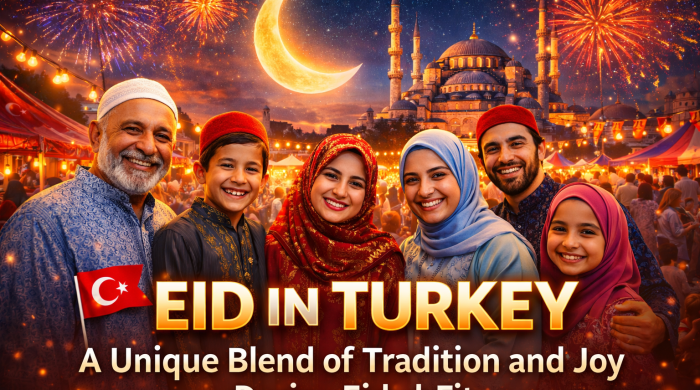
Exploring global cultures, few celebrations are as vibrant and heartwarming as Eid al-Fitr in Turkey. Known locally as “Ramazan Bayramı” or simply “Bayram,” Eid in Turkey is a deeply cherished holiday that blends Islamic traditions with centuries-old Turkish customs.
As a bridge between Europe and Asia, Turkey offers a unique cultural experience where modern lifestyles meet rich heritage. For Americans, understanding Eid in Turkey provides a fascinating glimpse into how a Muslim-majority country celebrates one of its most important religious festivals.
In Turkey, Eid is often called the “Sugar Feast” because of the central role sweets play in the celebration. But beyond desserts, Eid is about respect, family, generosity, and unity.
Unlike some countries where Eid celebrations focus heavily on large public festivals, Turkish Eid traditions are more intimate and family-oriented. The emphasis is on visiting loved ones, honoring elders, and strengthening social bonds.
This makes Eid in Turkey feel both deeply personal and culturally rich—something that resonates strongly with American values of family and togetherness.

The first day of Eid al-Fitr in Turkey begins early with special Eid prayers held in mosques across the country.
From the iconic Blue Mosque in Istanbul to small neighborhood mosques, people gather in large numbers dressed in their best clothes. The atmosphere is peaceful yet joyful, as worshippers greet each other with warm smiles and say “Bayramınız mübarek olsun,” meaning “Blessed Eid to you.”
After prayers, it is customary to visit the graves of loved ones, offering prayers and remembering those who have passed away. This tradition reflects a deep sense of respect and remembrance.
One of the most defining aspects of Eid in Turkey is the tradition of visiting family and friends.
Younger family members visit elders first, showing respect by kissing their hands and placing them on their forehead—a symbolic gesture of honor. In return, elders give blessings and often offer sweets or small gifts.
Homes are filled with laughter, conversation, and the aroma of delicious food. For American audiences, this strong focus on family connection during Eid feels similar to holidays like Thanksgiving.
Eid in Turkey is famously known as the “Sugar Feast,” and for good reason.
Visitors are welcomed with a variety of traditional sweets, including:
Turkish delight (lokum)
Baklava made with layers of pastry and honey
Chocolate and candies for children
Children play a special role during Eid. They go door-to-door in neighborhoods greeting elders and receiving sweets—similar to trick-or-treating in the United States.
This joyful interaction creates a festive and inclusive atmosphere across communities.

While sweets are a highlight, Eid meals in Turkey are equally impressive.
Families prepare elaborate dishes such as:
Lamb stews and kebabs
Rice pilaf
Stuffed vegetables (dolma)
Fresh bread and salads
Meals are shared among family members and guests, reinforcing the spirit of hospitality.
For Americans, Turkish Eid cuisine offers a delicious introduction to Middle Eastern and Mediterranean flavors, often blending healthy ingredients with rich taste.
Like in other Muslim cultures, charity is an essential part of Eid al-Fitr in Turkey.
Before Eid, people give “fitre” (Zakat al-Fitr) to those in need, ensuring that everyone can celebrate the holiday. Many also donate to charities, support local communities, and share food with neighbors.
This emphasis on giving aligns closely with American values of compassion and community service.
Although Eid in Turkey is largely family-centered, public life also reflects the festive mood.
Government offices and businesses close for several days, allowing people to travel and spend time with loved ones. Many families take advantage of the holiday to visit coastal cities, villages, or tourist destinations.
Popular places like Istanbul, Antalya, and Cappadocia become lively with visitors, blending Eid celebrations with travel and leisure.
In today’s digital world, Eid celebrations in Turkey are also shared online.
Social media platforms are filled with Eid greetings, family photos, and festive moments. Younger generations combine traditional customs with modern lifestyles, creating a unique blend of old and new.
This balance between tradition and modernity makes Eid in Turkey especially appealing to global audiences, including Americans.
For readers in the United States, learning about Eid in Turkey offers more than cultural knowledge—it builds understanding.
Turkey’s approach to Eid highlights universal values:
Family connection
Respect for elders
Generosity and charity
Celebration of community
These are values that resonate across cultures and religions.
As the U.S. continues to grow more diverse, understanding global traditions like Eid helps foster inclusivity and mutual respect.
Eid al-Fitr in Turkey is a beautiful celebration of faith, family, and tradition.
From heartfelt family visits and sweet treats to acts of charity and cultural customs, Turkish Eid offers a unique and enriching experience.
For American audiences, it serves as a reminder that while cultures may differ, the essence of celebration—love, gratitude, and togetherness—is truly universal.
Section-11, Block-A, Mirpur, Dhaka-1216. Mobile : 01700 000000. Email: fastinfoworldinfo@gmail.com
All rights reserved © 2026 fastinfoworld